AC Condensate Drain Leaks: Clogs, Overflows, and Summer Water Damage
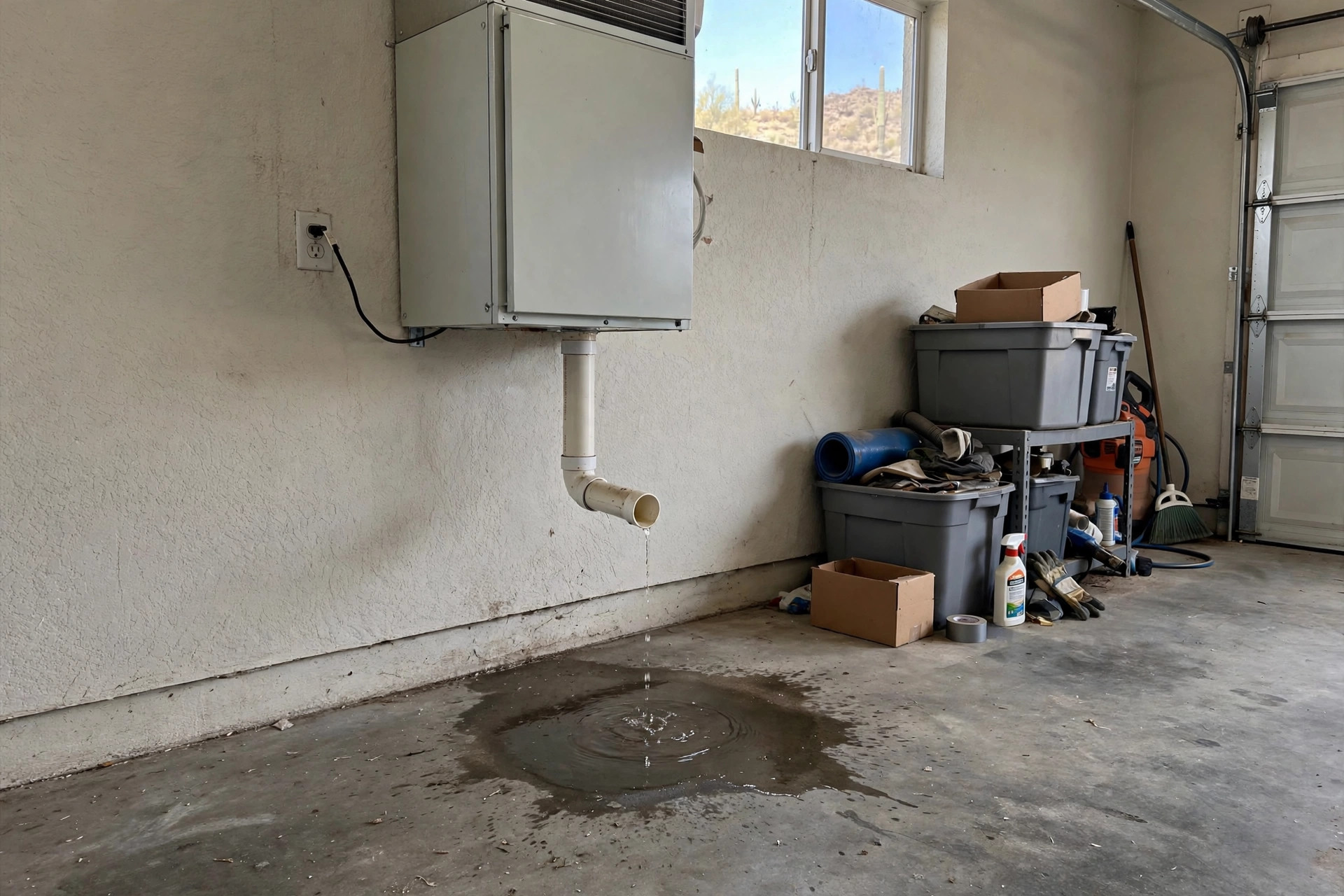
An air conditioner in an Arizona summer pulls litres of moisture from the air every day, and all of it leaves through one small drain line. When that line clogs, the water has to go somewhere — usually onto a floor or ceiling.
- Practical homeowner guides
- Written by leak detection pros
- Sun City, AZ focused
When the Float Switch Keeps Tripping
A float switch that trips once is a warning; one that trips repeatedly is a pattern worth investigating. Repeated trips mean the pan keeps filling, which means the drain line keeps blocking, the line slope is wrong, or the pan itself is cracked or misaligned. Clearing the line helps for a week, then the pan fills again. At that point, look at the whole drain path: a line that sags between supports holds standing water and grows buildup in the sag, and a pan that sits unlevel pools water at one end instead of draining. Fixing the slope or the pan ends the cycle, while repeated clearing only treats the symptom. If the pan and line look right and water still appears, the source may be plumbing nearby rather than condensate at all.
How the Condensate Line Works
Warm indoor air passes over a cold coil, moisture condenses on it, and the water drips into a pan and out through the condensate drain line — usually to the outside or a floor drain. In a desert summer the system runs for months, so the line carries water almost constantly. Dust, algae, and slime build up inside the narrow line over a season, and that buildup is the most common cause of an overflow.
Overflow Signs Inside the House
Watch for water near the indoor air handler, a damp ceiling below an attic unit, a musty smell near vents, or the system shutting off unexpectedly — many units have a float switch that stops the system when the pan fills. A secondary drain pan with water in it means the main line is already blocked. If the air handler sits in the attic, an overflow can stain the ceiling below before anyone notices, so a ceiling stain under an attic unit should always be checked as a drain problem first.
Keeping the Line Clear
Once or twice a season, find the drain line outlet outside and check that it drips while the system runs. A dry outlet on a humid running day, or water pooling at the indoor unit, means the line is blocked. Pouring a cup of plain water through the cleanout, if your unit has one, and keeping the area around the outlet clear of debris helps. If the line keeps clogging, the slope or routing may need attention — a line that sags holds standing water and grows buildup faster.
When It Is Not the Drain Line
Not every puddle near an air handler is condensate. A leaking water line to a nearby appliance, a roof leak above an attic unit, or a plumbing leak in the same wall can all look similar. If the drain line runs clear and the water keeps appearing, or dampness spreads to walls away from the unit, a wall and ceiling leak check can separate a plumbing leak from a condensate problem. Our water leak detection service pinpoints the source without opening ceilings at random.
A Summer Check Worth Doing
At the start of the cooling season, confirm the outlet drips, the pan is dry, and the float switch moves freely. Two minutes at the start of summer prevents the most common mid-summer overflow, and our FAQ page explains what a detection visit looks like if the source turns out to be plumbing, not condensate.
Frequently Asked Questions
Why is water pooling under my indoor AC unit?
Usually a clogged condensate drain line or a full drain pan. Check the outdoor outlet: if it is dry while the system runs, the line is blocked.
Can a condensate overflow damage a ceiling?
Yes. Attic units that overflow can stain and soften the ceiling below before anyone notices, which is why ceiling stains under an attic unit need a prompt check.
How often should the drain line be checked?
At least at the start of the cooling season, and again mid-summer in heavy use. A line that clogs repeatedly may have a slope or routing problem.
Why does my AC shut off on hot days?
A float switch in a full drain pan stops the system to prevent overflow. It is a warning, not a fault — the drain line needs clearing.
Water Near the AC Unit or a Stain Below an Attic Unit?
Condensate overflows spread fast in summer. Call for precise detection if the source is not clearly the drain line.
(623) 270-6035 Request a Quote