The Annual Home Leak Inspection: A Room-by-Room Checklist for Sun City Homeowners
Most household leaks are found by accident, months late. One structured walk-through a year — same route, same checks — catches them early, and it takes under an hour.
- Practical homeowner guides
- Written by leak detection pros
- Sun City, AZ focused
Setting a Reminder That Actually Sticks
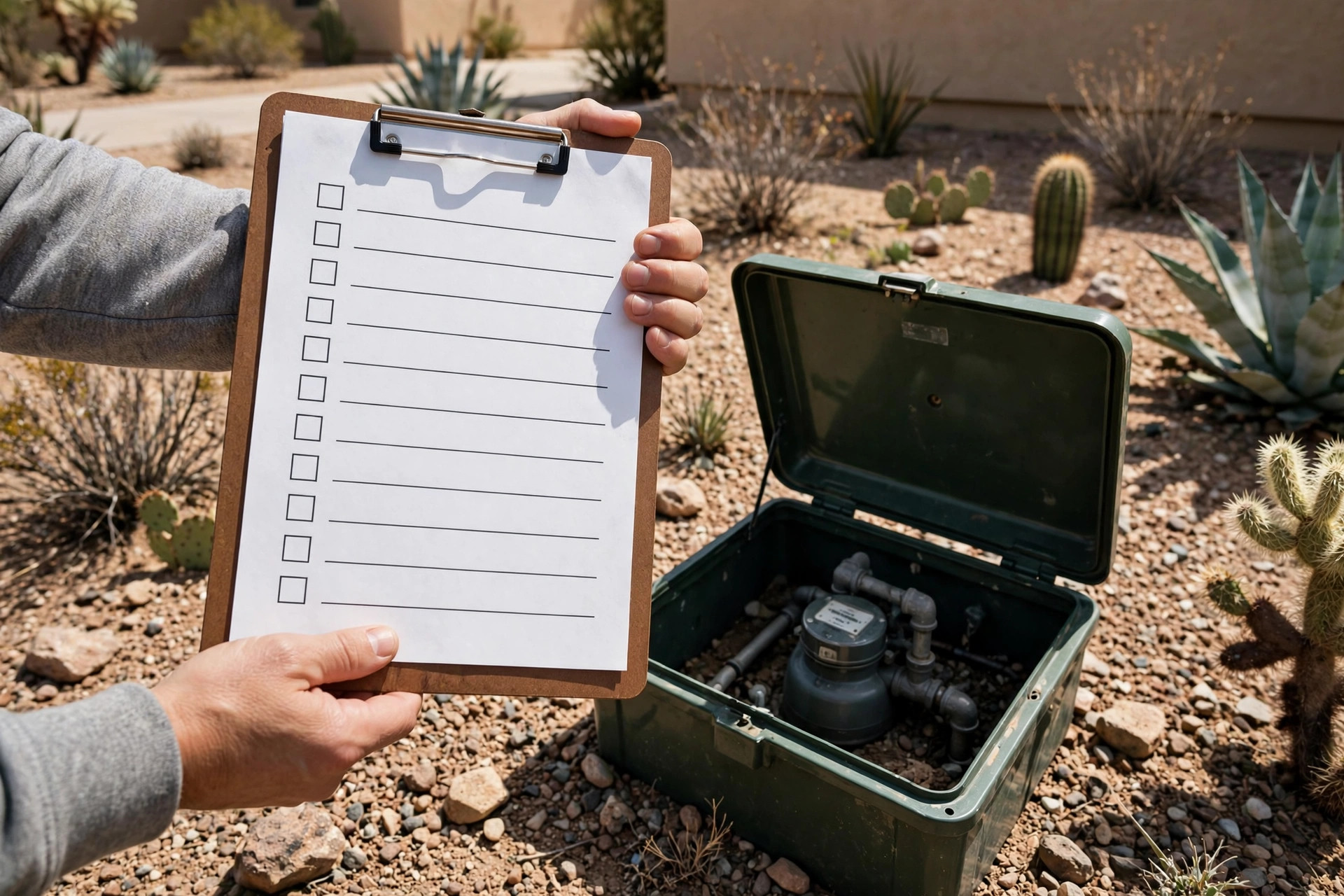
An annual inspection only works if it happens, so tie it to something that already repeats: the start of the cooling season, a daylight-saving clock change, or the anniversary of moving in. Put the route on one page — meter, kitchen, bathrooms, laundry, water heater, shutoffs, yard — and keep it where the last inspection notes live, so each year starts from last year's findings instead of from scratch. Note the date, the meter readings, and anything damp or suspicious, even if it turns out to be nothing. Over a few years, that page becomes the home's water history: it shows which spots keep recurring, which repairs held, and when a new pattern started. A checklist that lives in a drawer and gets used beats a perfect one that never leaves the computer.
Start at the Meter
Begin with everything off: no taps, no appliances, no irrigation running. Read the meter, wait thirty minutes, and read it again. A meter that moved means water is escaping somewhere, and the rest of the walk-through is now a search with a confirmed target. If the meter holds steady, the walk-through is still worth doing — some leaks only appear when a fixture runs. Our water meter check guide walks through the test in detail.
Kitchen, Bathrooms, and Laundry
In each wet room, open cabinets and look properly: feel cabinet floors, check traps and supply connections, look for swelling, staining, or musty smells. Around toilets, check for rocking, soft flooring, and dye-test the flapper. Behind the washer, look for damp walls and worn hoses. In the kitchen, add the dishwasher sides and the fridge water line. This is the highest-value part of the inspection — most household leaks live in these rooms, and the checks are all visual.
Water Heater, Shutoffs, and Walls
Around the water heater, look for dampness at the base, drips at connections, and staining on the wall behind it. Test every shutoff valve you find — under sinks, at the washer, at the main — by turning it twice a year so it still moves when needed. Walk the walls shared with plumbing and look for bubbling paint, swelling baseboards, and grout that stays dark. Any of these signs earns a closer look rather than a shrug.
Yard, Irrigation, and Outdoor Faucets
Outside, run each faucet and watch it after closing, check hose connections and splitters, and walk the irrigation zones for wet strips, soft ground, or one patch of lawn greener than the rest. Check the pool pad if you have one, and look at the ground around the meter box. Yard signs are easy to dismiss as watering or rain — but a wet strip that never dries, or a meter that runs with everything off, points to a buried line leak.
What to Do With What You Find
Note every damp spot, stain, and smell with its room and wall, and re-check the meter after the walk-through. A list of findings, even a short one, turns a vague worry into a clear job for a detector. If the meter moved or dampness has no obvious source, a water leak detection visit pinpoints it without opening walls at random. Our FAQ page explains what that visit looks like.
Frequently Asked Questions
How long does an annual leak inspection take?
Under an hour for a typical Sun City home: meter test, wet rooms, water heater, shutoffs, and a yard walk. The meter test itself needs thirty quiet minutes.
What is the single most valuable check?
The meter test with everything off. It confirms whether any leak exists at all, before you search room by room.
Should I inspect even if nothing looks wrong?
Yes. Slow leaks hide behind walls and under slabs for months. The inspection exists to find the ones with no visible sign yet.
What do I do if the meter moves but I find nothing wet?
The leak is hidden — in a wall, under the slab, or in a buried line. That is exactly when detection, not more searching, is the right step.
Annual Inspection Found Dampness or a Moving Meter?
A checklist finds the signs; detection finds the source. Call for precise pinpointing before the damage spreads.
(623) 270-6035 Request a Quote