Bathroom Leak Warning Signs: Showers, Tubs, Toilets, and Vanities
The bathroom is the wettest room in the house, and most of its plumbing hides behind tile, under tubs, or inside walls. Here is how to spot a bathroom leak early, while it is still a small repair.
- Practical homeowner guides
- Written by leak detection pros
- Sun City, AZ focused
Shower and Tub Leaks Start at the Seals
Shower leaks rarely announce themselves with a puddle. They start where tile meets the tub, where grout cracks, or where the shower door seal wears thin, and the water slips behind the wall a little at a time. Watch for grout that stays dark long after a shower, tiles that feel loose or hollow, and paint bubbling on the wall that backs onto the shower. A musty smell in a bathroom that is cleaned regularly is another early clue. If the ceiling below a second-floor bathroom stains or the floor near the tub feels soft, the leak has been running longer than you think.
The Toilet Base Tells the Truth
A toilet can leak at its base for months without a visible puddle, because the water wicks into the flooring beneath it. Check for a toilet that rocks slightly when you sit, flooring that darkens or softens around the base, and a faint sewer or musty smell that cleaning never quite removes. The dye test still works here: a few drops of food colouring in the tank, left undisturbed, will show in the bowl if the flapper leaks. A base leak is a wax-ring or flange problem, and the longer it runs, the more flooring it quietly damages.
Vanities, Supply Lines, and Trap Connections
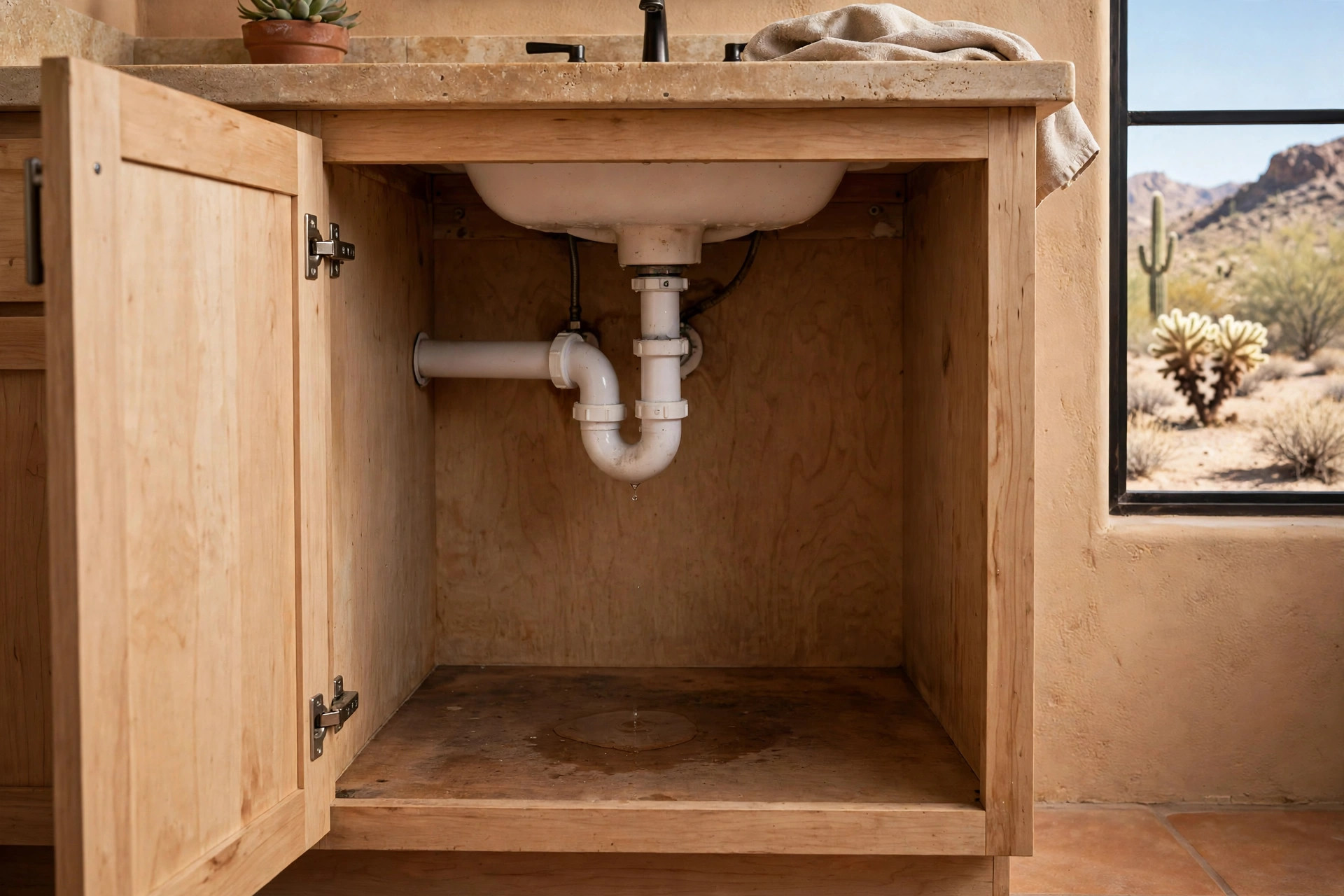
Open the vanity cabinet and look properly, the way you would under a kitchen sink. Feel the cabinet floor, check the trap and supply connections for drips, and look for swelling or staining on the cabinet base. Bathroom supply lines are small, but they run under pressure all day and all night, so a slow drip adds up fast. If your bathroom sits on a slab, a leak that reaches the slab can travel sideways and appear as dampness far from the vanity itself — which is why a slab leak check is sometimes the right next step when bathroom dampness has no obvious source.
Wall and Floor Clues You Should Not Ignore
Bathroom leaks eventually show in the finishes: baseboards that swell or pull away from the wall, paint that bubbles near the floor, tile grout that darkens in one patch, and flooring that feels spongy near the tub or toilet. Because bathrooms are mopped often, these signs get blamed on splashes — but a stain or swelling that returns in the same spot after cleaning is a leak until a check proves otherwise. A wall leak detection check can confirm whether dampness comes from a pipe inside the wall rather than from surface water.
When Bathroom Dampness Needs Professional Detection
Some bathroom leaks are obvious and some are not. If dampness keeps returning, the source sits behind tile or inside a wall, or your water meter shows use with everything off, it is time for detection rather than more guesswork. Our water leak detection service uses acoustic listening and thermal imaging to pinpoint the break without opening tile at random. Our FAQ page explains what a detection visit looks like, step by step, so you know exactly what to expect.
Frequently Asked Questions
How do I know if a shower leak is behind the wall?
Grout that stays dark, loose tiles, bubbling paint on the adjoining wall, or a musty smell that cleaning never removes all point behind the wall. A thermal scan can confirm dampness without removing tile.
Can a toilet leak without water on the floor?
Yes. A worn wax ring lets water seep under the toilet and into the flooring, showing only as a rocking toilet, soft flooring, or a smell near the base.
Should I recaulk the tub if I suspect a leak?
Fresh caulk can slow surface water, but it will not fix a leak in the drain or supply lines behind the wall. If dampness returns after recaulking, get the plumbing checked.
How often should I check under the bathroom vanity?
Twice a year is enough: feel the cabinet floor, check the trap and supply lines, and look for stains or swelling. It takes two minutes and catches slow drips early.
Damp Bathroom Floor, Musty Smell, or Loose Tile?
Bathroom leaks hide behind tile and under tubs. Call for precise detection before the damage spreads.
(623) 270-6035 Request a Quote