Irrigation and Sprinkler Line Leaks: Signs Your Yard System Is Losing Water
Your irrigation system runs while you sleep, so a leak in a buried lateral or a broken sprinkler head can run for weeks before anyone notices. Here are the signs that give it away.
- Practical homeowner guides
- Written by leak detection pros
- Sun City, AZ focused
Why Irrigation Leaks Stay Hidden So Long
Irrigation leaks are easy to miss because the system runs on a timer, usually early in the morning or late at night when nobody is watching. Water from a cracked lateral line soaks straight into gravel or soil, and in a desert yard there is no lawn to show a soggy patch. Side yards and back corners that nobody walks through can hide a leak for a whole watering season, and because the plants above it get extra water, they often look healthier than the rest of the yard — which makes the leak even harder to suspect.
A Strip of Ground That Never Dries Out
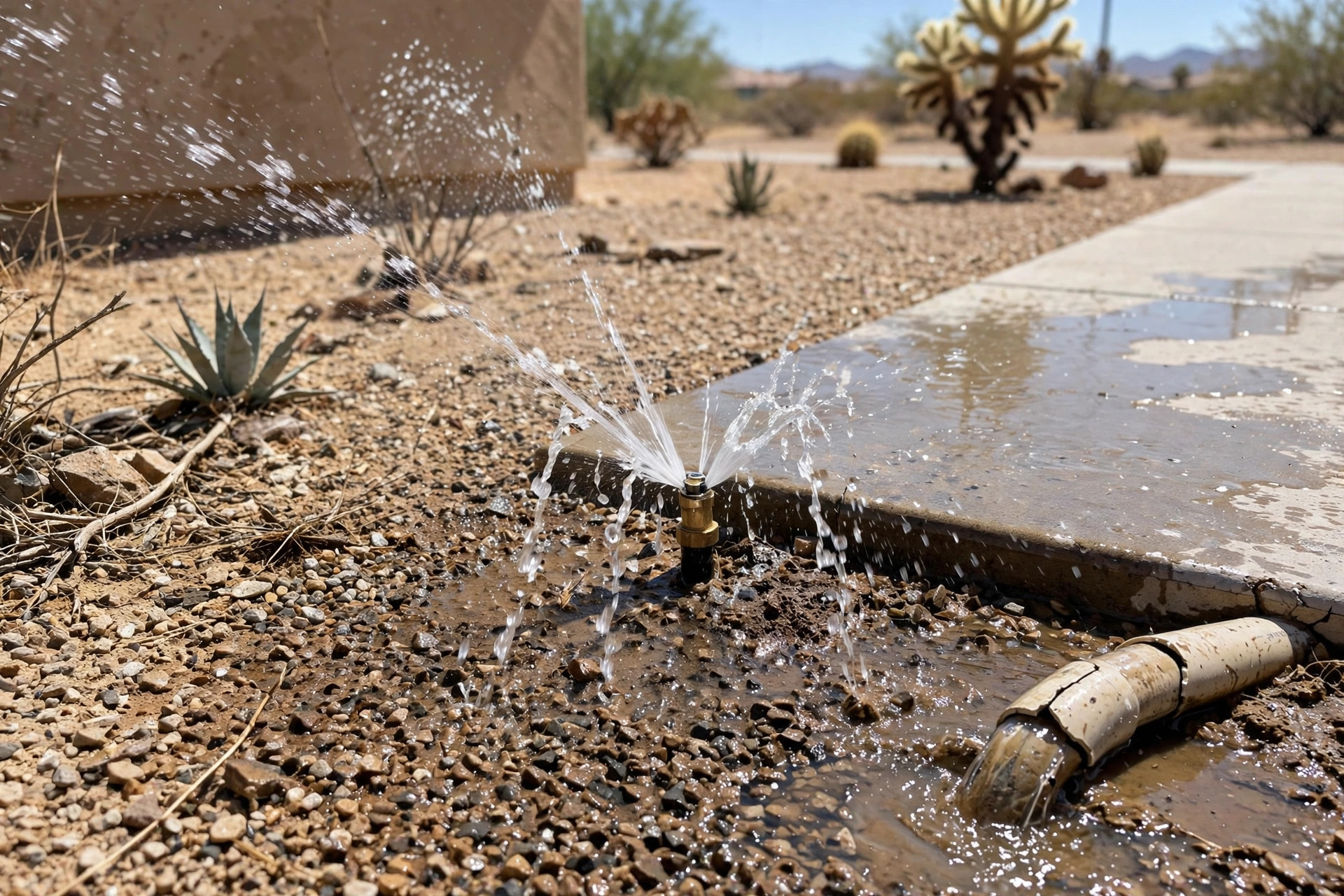
Walk each irrigation zone during a watering cycle and look for ground that stays wet long after the cycle ends. A soggy strip of gravel, a muddy patch beside a walkway, or one planter bed that is always damp while its neighbours are dry can all point to a lateral line leaking underground. If the damp area follows a straight line between sprinkler heads, that line is very likely the path of the buried pipe. A patch that stays wet even on days the system does not run deserves attention first.
Sprinkler Heads That Sputter, Mist, or Flood
Watch the heads themselves. A head that sputters, sprays a weak fan, or mists into the air instead of throwing a clean stream may be starved of pressure by a leak upstream. A head surrounded by a permanent puddle, or one that floods its immediate area while the rest of the zone looks normal, may have a cracked body or a broken connection below it. Heads that stay raised, tilted, or stuck after the cycle ends are also worth checking, since a damaged head wastes water every time the zone runs.
A Zone That Runs When It Should Not
If a zone seems to run outside its schedule, or one area of the yard is always wet even when the controller says the system is off, a valve may be stuck open. Irrigation valves can wear out or jam with grit, letting water seep through around the clock. Check the controller for unexpected run times and listen at the valve box for a faint hiss when the system should be silent. A valve problem is a different fix from a pipe break, but both show up the same way: water where it should not be, and a meter that keeps moving.
The Water Bill Clue
Because irrigation leaks are quiet, the water bill is often the first warning. Compare the current bill with the same month last year rather than with last month, since watering naturally rises in summer. A jump with no change in schedule, no new planting, and no extra watering days points to a leak somewhere in the system. If the bill stays high after you check the heads and valves, run the meter test: turn off every tap, appliance, and irrigation zone, then watch the meter for an hour. Movement with everything off confirms water is escaping.
How Pros Find a Buried Lateral Leak
Finding a leak in a buried irrigation line takes more than digging along the wet strip. Technicians use underground water line leak detection methods such as acoustic listening to hear the leak through the soil, and they isolate zones one at a time to narrow the search before any digging starts. Once the break is pinpointed, the repair stays focused on one small excavation instead of trenching a whole run of pipe. Homeowners in Sun City West and across the West Valley see the same signs, and our FAQ page answers common questions about how a detection visit works.
Frequently Asked Questions
How do I know if a wet patch is an irrigation leak or just overwatering?
Overwatering dries out within a day or two once the schedule changes, and it follows the sprinkler pattern. A leak stays wet in the same spot regardless of watering, often in a line between heads, and it may stay soft even on days the system does not run.
Can a sprinkler leak raise my water bill a lot?
Yes. A cracked lateral or a valve stuck open can run for every watering cycle, day after day, and because the water soaks into gravel or soil, nothing looks wrong above ground. That is why a bill jump with no schedule change is worth investigating promptly.
Should I dig up the lateral line myself?
No. Digging without knowing the line's exact route risks cutting the pipe further, damaging valve wiring, or hitting another utility. Mark the wet area, run the meter test, and let acoustic equipment pinpoint the break first.
My meter moves but the yard looks fine — what else could it be?
The leak may be under a walkway or driveway where water cannot surface, or it could be an indoor leak such as a silent toilet. Closing the house shutoff valve separates an inside leak from an outside one, which narrows the search considerably.
Soggy Strip or a Zone That Never Shuts Off?
An irrigation leak wastes water every cycle until it is found. Call for precise, non-invasive detection before it undermines a walkway.
(623) 270-6035 Request a Quote