Kitchen Leak Warning Signs: Under Sinks, Dishwashers, and Fridge Lines
The kitchen has more water connections than any other room in the house — sink, dishwasher, fridge, and sometimes a filter tap — and most of them hide inside cabinets or behind appliances. Here is how to catch a kitchen leak while it is still small.
- Practical homeowner guides
- Written by leak detection pros
- Sun City, AZ focused
Start Under the Sink
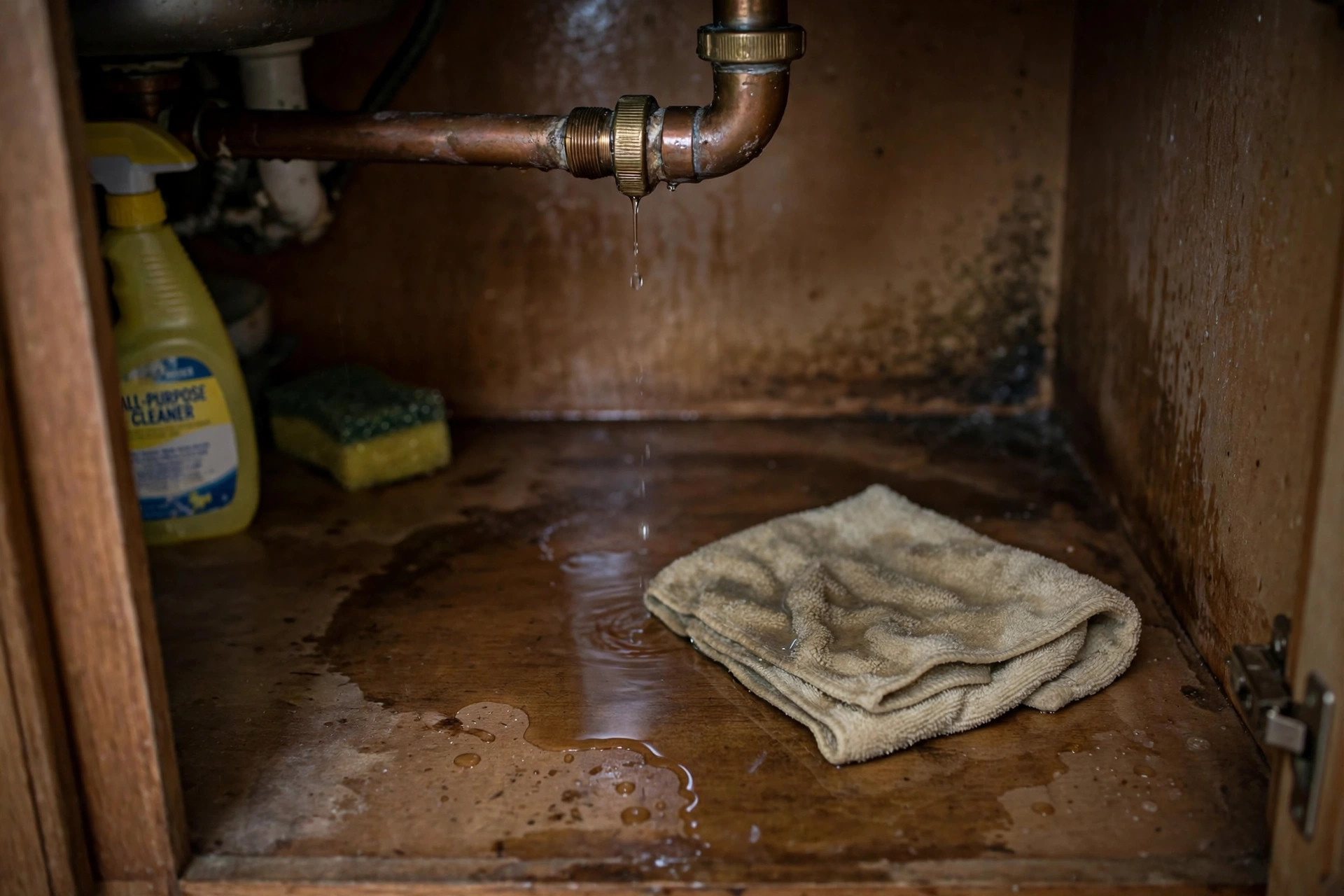
Open the cabinet under the kitchen sink and look properly, not just at a glance. Feel the cabinet floor for dampness, look for warped or swollen wood, water stains, or a musty smell that was not there before. Check the supply lines where they meet the taps, the sprayer hose connection, and the drain trap for slow drips — a drip that only appears when the tap runs is easy to miss. A small container or paper towel left under the trap for a week will reveal a slow leak that your eyes would not catch. Do this check twice a year; it takes two minutes.
Dishwasher Leaks: The Cycle-Only Leak
Dishwasher leaks are sneaky because they only happen while the machine runs. Watch for water on the floor in front of the dishwasher after a cycle, dampness in the cabinets on either side, or a musty smell near the kick plate. A worn door seal, a loose drain hose, or a cracked hose can let a small amount of water out with every wash, and that water soaks into flooring and cabinet bases out of sight. If the floor near the dishwasher feels soft or the laminate edge is curling, the leak has probably been running for a while.
Fridge Water Lines and Ice Makers
If your fridge has a water dispenser or ice maker, a thin water line runs to it — often a plastic line that ages and becomes brittle. Pull the fridge out carefully once or twice a year and look behind it: a puddle, a damp wall, mineral deposits on the line, or a musty smell all point to a slow drip. Because the fridge hides the leak completely, these drips can run for months, damaging the floor beneath and the wall behind. A line that looks discoloured, kinked, or stiff is a line worth replacing before it fails.
Floor and Wall Clues Around the Kitchen
Kitchen leaks eventually show in the finishes. Vinyl or laminate that curls near the sink or dishwasher, grout that darkens in one area, baseboards that swell or pull away from the wall, and paint bubbling on the wall behind the sink are all clues that water is getting where it should not be. Because kitchens are cleaned often, these signs are sometimes wiped away or blamed on spills — but a stain or swelling that returns after cleaning, in the same spot, is a leak until proven otherwise. A wall leak detection check can confirm whether the dampness comes from a pipe inside the wall.
The Shutoff Habit Every Kitchen Needs
Every sink has shutoff valves underneath it, and the dishwasher and fridge usually share them or have their own. Find them, label them, and turn them twice a year to make sure they still move — a valve that has seized shut is useless in an emergency. If a valve is stiff or corroded, have it replaced before you need it. Knowing exactly which valve stops the kitchen supply turns a burst hose from a flooding emergency into a five-minute inconvenience, and it protects the rest of the house while you wait for help.
When a Kitchen Leak Needs Professional Detection
Some kitchen leaks are obvious and some are not. If dampness keeps returning, the source is behind a cabinet or inside a wall, or your meter test shows water escaping with everything off, it is time for detection rather than more guesswork. Our water leak detection service uses acoustic listening and thermal imaging to pinpoint the break without opening cabinets or walls at random. Our FAQ page explains what a detection visit looks like, step by step, so you know exactly what to expect before anyone arrives.
Frequently Asked Questions
How often should I check under the kitchen sink?
Twice a year is enough for most homes: feel the cabinet floor, look for stains or swelling, and check the supply and drain connections for drips. A paper towel left under the trap for a week will catch a slow drip you might otherwise miss.
Can a dishwasher leak without any water on the floor?
Yes. A small leak can soak into the cabinet base or the flooring beneath the machine, showing only as a musty smell, curling laminate, or dampness in the neighbouring cabinet. Leaks that only happen during a cycle are the easiest to miss.
Should I shut off the fridge water line when I travel?
If you will be away for an extended period, shutting off the fridge and dishwasher supply lines removes two common leak sources entirely. It is a simple step that prevents a slow drip from running for weeks unnoticed.
My kitchen floor is curling near the sink — is that always a leak?
Not always; spills and humidity can curl flooring too. But curling or swelling that returns in the same spot after cleaning, especially near a sink or dishwasher, should be treated as a leak until a check proves otherwise.
Damp Cabinet, Musty Smell, or Curling Floor in the Kitchen?
Kitchen leaks hide behind cabinets and appliances. Call for precise detection before the damage spreads.
(623) 270-6035 Request a Quote