Older Sun City Homes and Hidden Pipe Leaks: What Age Does to Your Plumbing
Sun City was built for retirement living decades ago, and many of its homes still run on their original plumbing. Aging pipes rarely fail loudly — they leak quietly, behind walls and under slabs, for months before anyone notices.
- Practical homeowner guides
- Written by leak detection pros
- Sun City, AZ focused
Sun City's Homes Are Not New
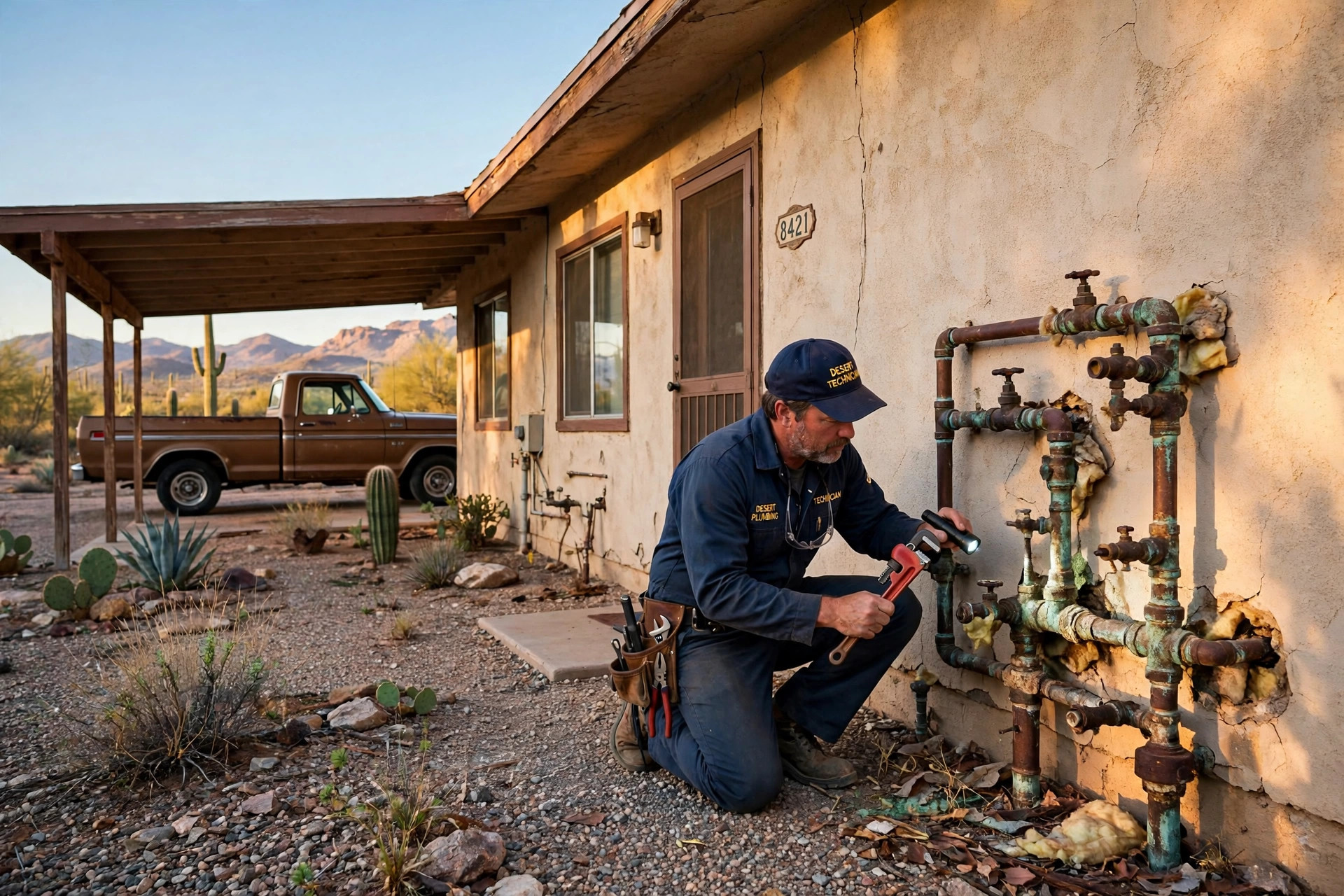
Much of Sun City's housing stock dates back to the 1960s, 70s, and 80s, which means the plumbing inside those walls has already served for decades. Pipes do not last forever: joints weaken, interior surfaces corrode, and materials that were standard when the home was built may be past their expected service life. A home that has never had a leak is not necessarily safe — it may simply be a home whose first aging-pipe leak has not surfaced yet. Knowing what is in your walls is the first step to catching that leak early.
Pipe Materials and Their Weak Points
Different eras used different materials, and each ages differently. Galvanized steel pipe, common in older homes, corrodes from the inside, narrowing the pipe and eventually rusting through at joints and threads. Copper pipe is longer-lived but can still develop pinhole leaks after decades, especially at fittings and in areas where water chemistry is hard on metal. Supply lines to toilets, sinks, and washing machines — often flexible hoses — age faster than the pipes in the walls and are a common source of sudden indoor leaks. If you do not know what your home has, a look at any exposed pipe near the water heater or meter usually tells the story.
Warning Signs of an Aging-Pipe Leak
Aging-pipe leaks announce themselves in small ways. Watch for water that occasionally runs discoloured or rusty, especially after the taps have sat unused overnight. Recurring low pressure at one fixture, a musty smell near a baseboard, paint bubbling on a wall, or a floor that feels slightly warm in one spot can all point to a slow leak. A water bill that creeps upward without a change in routine is another classic sign. Any one of these on its own has other explanations, but two or more together are worth investigating rather than waiting on.
Slab Leaks in Older Homes
Many Sun City homes sit on concrete slabs with water lines running beneath them, and those buried lines are the hardest to inspect. A slab leak in an older home often shows up as a warm patch on a tile floor, the sound of running water when every tap is off, damp carpet edges, or a crack in a floor or wall that was not there before. Because the leak is under concrete, it can run for months, quietly washing away supporting soil. Early detection matters here more than anywhere: the longer a slab leak runs, the more ground it disturbs.
What a Detection Visit Checks in an Older Home
A detection visit on an older home starts with the basics: the meter test to confirm water is escaping, and pressure testing to isolate which section of pipe is at fault. From there, technicians use acoustic listening to hear the leak through walls or slab, and thermal imaging to spot temperature differences caused by dampness. The goal is a pinpointed location, not a guess — because in an older home, opening walls or floors at random causes damage that the leak itself has not. Our water leak detection service covers homes across the area, including Peoria, and the visit ends with a clear report on where the leak is.
Habits That Lower the Risk
You cannot make old pipes young again, but you can catch their leaks early. Read your water meter once a month and compare it with the previous month. Look under every sink twice a year for dampness, swelling, or a musty smell. Know where your main shutoff valve is and test it before you need it in an emergency. Replace aging flexible supply hoses before they fail rather than after. And if your home still has its original plumbing, a detection check after any warning sign — a bill jump, a warm floor spot, a musty wall — is the cheapest insurance against a leak that runs for months unseen.
Frequently Asked Questions
How long do home water pipes last?
It depends on the material and the water. Galvanized steel often shows serious corrosion after several decades, copper can last much longer but still develops pinhole leaks at fittings over time, and flexible supply hoses age faster than either. Age alone does not prove a leak, but it raises the odds.
Are older Sun City homes more likely to have slab leaks?
Slab construction plus decades-old buried lines is a combination worth watching. Warm floor spots, the sound of running water with taps off, and damp carpet edges are the classic signs, and they deserve a detection check rather than a wait-and-see approach.
Can I replace aging pipes before they leak?
Yes — repiping is a plumbing decision, and detection helps target it. Pinpointing an existing leak first tells you which runs are already failing, which is useful information before committing to larger work.
My home has never leaked. Should I still check the meter?
Yes. A monthly meter reading takes five minutes and catches slow leaks that show no visible sign at all. It is the simplest early warning system an older home has.
Older Home, Unexplained Bill Jump, or Warm Floor Spot?
Aging pipes leak quietly. Call for precise, non-invasive detection before a slow leak becomes a big repair.
(623) 270-6035 Request a Quote