Pool Equipment Leaks: Pumps, Filters, Valves, and Pipes at the Pad
When a pool loses water, most owners suspect the shell. But the equipment pad — pump, filter, valves, and joints — loses water just as often, and it is far easier to check. Start at the pad.
- Practical homeowner guides
- Written by leak detection pros
- Sun City, AZ focused
Keeping a Simple Pool Water Log
A short log turns guesswork into evidence. Once a week, note the water level against a fixed mark on the skimmer, whether the pump ran normally, and whether the pad looked dry. After a month, the pattern speaks: steady loss with the pump running points to equipment, loss with it off points to shell or plumbing, and loss that stops after a repair confirms the fix worked. The log also helps a detector, because it shows when the loss started and how it changed with pump use. A notebook by the pad, or a phone note with the date and level, is all it takes — and it saves the next person who works on the pool from starting the diagnosis from zero.
The Pump Seal Is the Usual Suspect
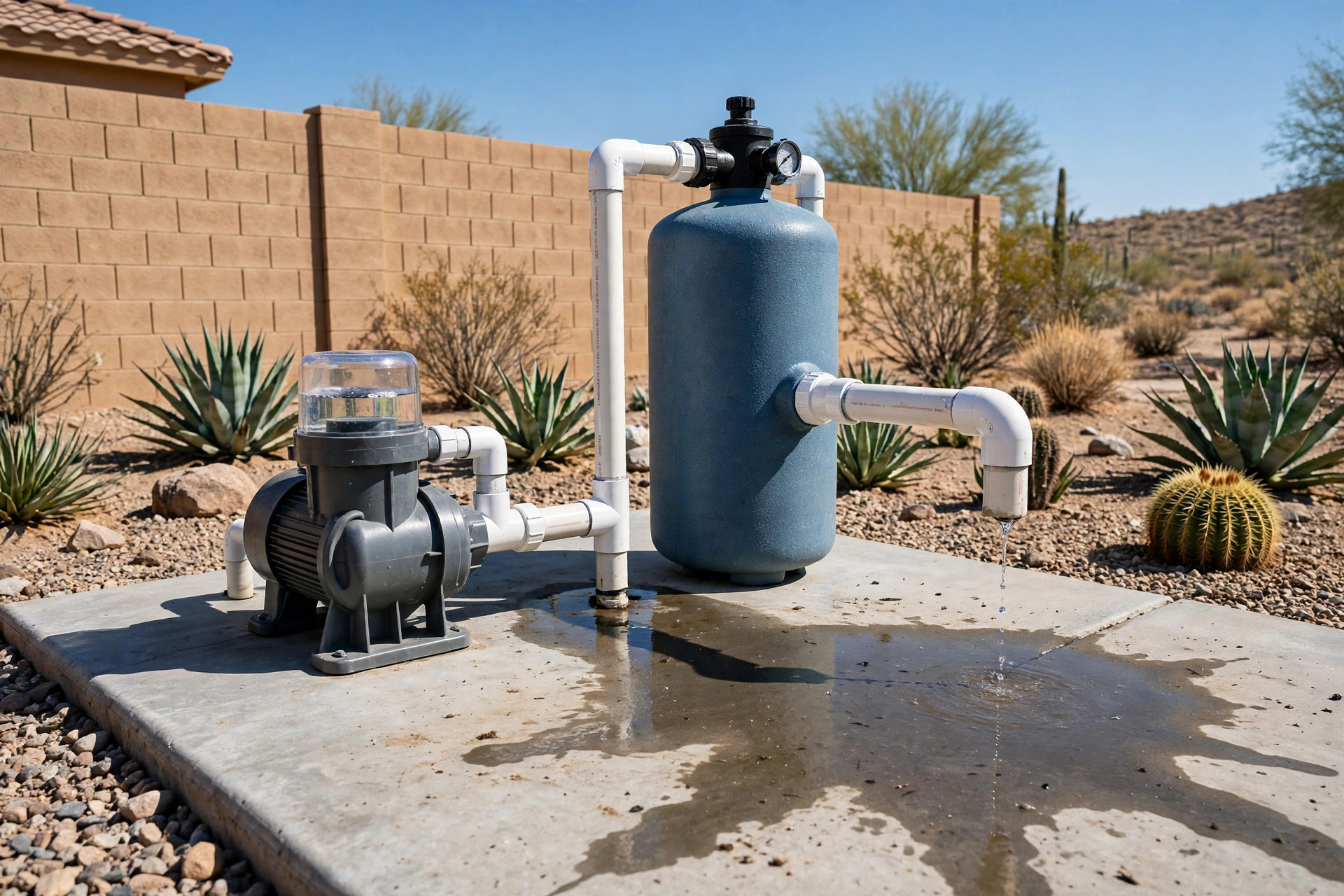
Look under the pump first. A failing shaft seal drips steadily while the pump runs, leaving a wet patch or mineral crust on the pad beneath it. The drip may stop when the pump stops, which is why the pad can look dry in the morning and wet by afternoon. A seal drip also lets air into the system, so watch for a pump that loses prime, runs louder than usual, or shows bubbles in the pump basket. Catching a seal early is a small repair; ignoring it can damage the motor.
Filter Tanks, Valves, and Unions
Walk the pad with the pump running and look at every joint: filter tank seams, multiport valve connections, unions, and threaded fittings. White mineral crust, green staining, or a joint that stays damp after the pad dries all mark a slow leak. Valves that weep only when turned to a certain position have worn seals inside. Tighten a weeping union by hand first — overtightening cracks fittings — and note which joints keep weeping, because a joint that leaks under pressure will only get worse.
Pad Leaks vs Shell Leaks: The Bucket Test
If the pad looks dry but the pool still loses water, run a bucket test: set a filled bucket on a step, mark both water levels, and compare after a day with the pump off. If the pool drops faster than the bucket, water is escaping somewhere. If the level holds with the pump off but drops with it running, the equipment side is the likely source. Our pool leak detection service can then pinpoint whether the loss sits in the pad, the plumbing, or the shell.
Pipes Between Pad and Pool
The buried lines between the pad and the pool can leak too, showing as a persistently wet strip of soil, a soft spot in the deck, or a patch of lawn that stays greener than the rest. A underground line check traces those runs without digging up the yard at random. Our FAQ page explains what a detection visit involves, so you know what to expect.
A Monthly Pad Walk
Once a month, walk the pad while the pump runs: look under the pump, at every joint, and at the ground around the pad. Five minutes catches most equipment leaks while they are still a seal or a fitting, not a motor or a deck repair.
Frequently Asked Questions
How do I know if my pool leak is at the equipment pad?
If the pool holds its level with the pump off but drops with it running, the equipment side is the likely source. Wet patches or mineral crust on the pad confirm it.
What does a failing pump seal look like?
A steady drip under the pump while it runs, mineral crust on the pad, and sometimes a pump that loses prime or runs louder than usual.
Can a small pad leak matter?
Yes. A slow equipment leak runs every day the pump runs, and it can damage the motor, undermine the pad, and mask a second leak elsewhere.
Should I overtighten a weeping union?
No. Hand-tight is enough; overtightening cracks fittings and turns a seal repair into a fitting replacement.
Pool Losing Water or Wet Patch on the Equipment Pad?
Pad leaks are the easiest pool leaks to fix — once found. Call for precise detection of pad, plumbing, or shell loss.
(623) 270-6035 Request a Quote