The Silent Toilet Leak: How a Dye Test Finds Hidden Water Waste
Your toilet can waste thousands of gallons a month without making a sound. The food-coloring dye test takes ten minutes — here's how to run it, what it reveals, and what to do with the answer.
- Practical homeowner guides
- Written by leak detection pros
- Sun City, AZ focused
What Is a Silent Toilet Leak?
A silent toilet leak happens when water flows from the tank into the bowl without flushing — usually past a worn flapper or through a misadjusted fill valve. Because the water goes straight down the drain, there's no puddle, no sound, and no visible sign. The toilet looks perfectly fine. The only evidence is the fill valve quietly topping up the tank, over and over, day and night. These leaks are the most common hidden water waste in American homes, and they're one of the first things to check whenever a water bill climbs with no change in household habits.
The Tell-Tale Signs (If You Know What to Listen For)
Most homeowners catch the leak only when the bill jumps, but there are earlier clues. The classic one is "ghost flushing" — the toilet briefly refills every few minutes without being used. Listen for a faint hiss or trickle from the tank, especially at night. Feel the back of the bowl for a constant slow ripple of water, or look for a faint color change in the bowl water. In hard-water areas like Sun City, mineral buildup accelerates wear on the rubber flapper, so toilets here develop these leaks faster than you'd expect — it's worth checking yours once a year even if everything seems fine.
Step 1: Get Dark Food Coloring
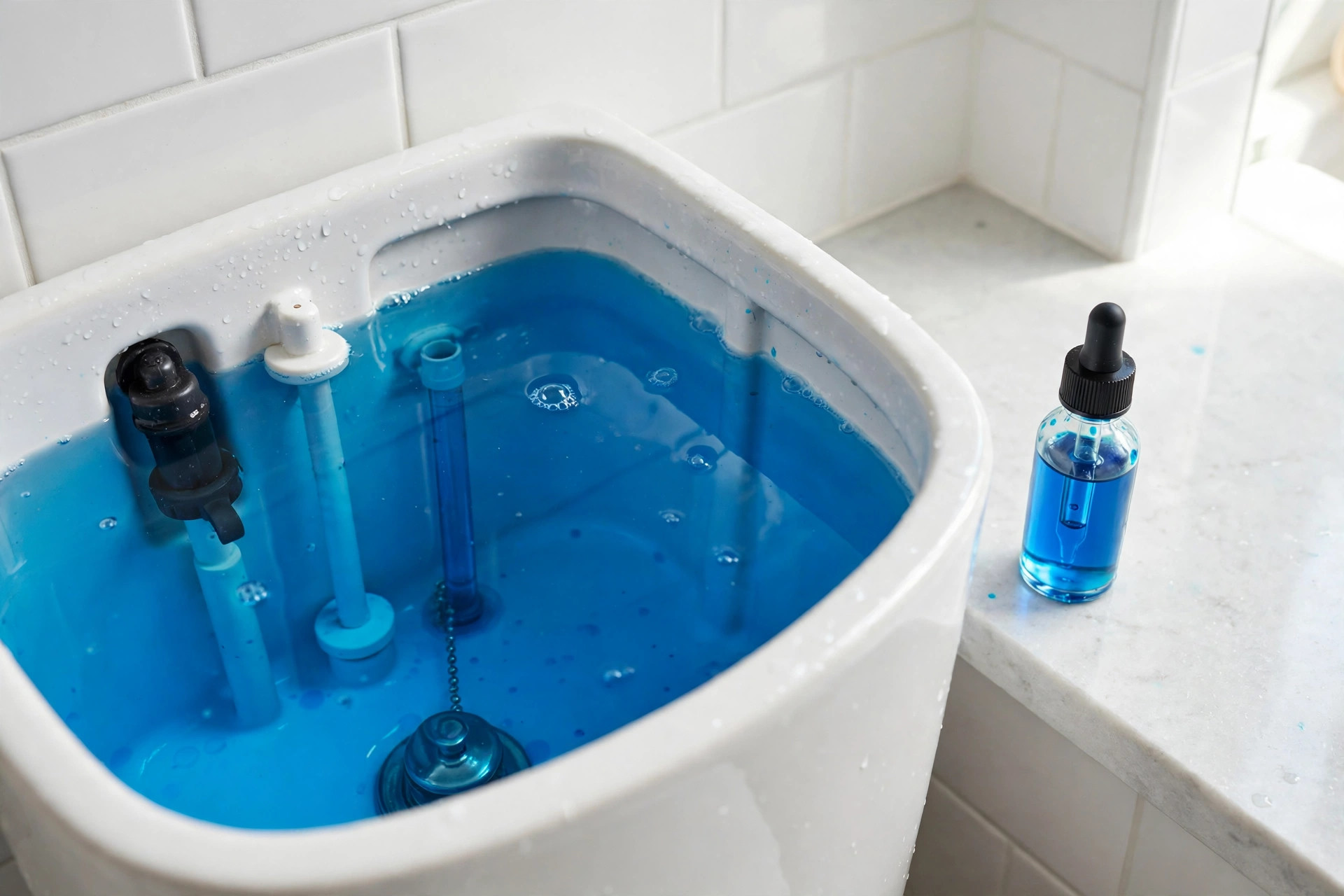
Any dark food coloring works — blue or red give the clearest contrast against white porcelain. Don't use the colored tablet-style bowl cleaners for this; they can stain and, worse, some contain chemicals that degrade rubber parts over time. Plain liquid food coloring from the grocery store is the right tool. While you're at it, check every toilet in the house — guest bathrooms that see little use are some of the worst offenders, because a failing flapper there can run unnoticed for months.
Step 2: Add the Dye to the Tank — Not the Bowl
Lift the tank lid (it just lifts off; set it somewhere safe so it can't fall) and add 5–10 drops of food coloring to the tank water, then gently stir. The tank water should be visibly colored. Don't flush. This is the critical detail: if you flush now, you'll wash out the test and have to start over. Make sure nobody in the house uses that toilet during the test — tape the lid closed or leave a note on it if you share the bathroom.
Step 3: Wait 15–30 Minutes, Then Check the Bowl
After at least 15 minutes (30 is better), look at the bowl water without flushing. If you see any color in the bowl, the test is positive: tank water is leaking into the bowl. The darker the color, the bigger the leak. If the bowl water is perfectly clear, the tank holds water correctly and that toilet is innocent. Repeat the test on every toilet in the house — it costs pennies and rules out the single most common source of unexplained water use.
What Causes It: Flappers, Fill Valves, and Chains
A positive dye test usually points to one of three culprits. The most common is a worn or warped flapper — the rubber seal at the bottom of the tank that lifts when you flush. Chlorine in the water supply and mineral scale slowly degrade it until it no longer seals flat. Next is a fill valve set too high, letting water flow continuously down the overflow tube. Third is a flush chain that's tangled or too short, preventing the flapper from seating. These are all simple mechanical issues a homeowner can often spot once the dye test confirms the leak exists.
What If the Dye Test Is Negative?
A negative test is useful information — it rules out the toilet, which narrows the hunt. But if your water use is still higher than it should be, the water is going somewhere else: a running hose bib, an irrigation valve stuck open, or a hidden supply-line or slab leak. The next diagnostic is the water meter test, which proves whether water is flowing with everything shut off. And if the meter says yes but you can't find the source, that's exactly the job for professional water leak detection — acoustic listening and thermal imaging find the leak without opening walls on a guess.
Frequently Asked Questions
How do I do the toilet dye test?
Add 5–10 drops of dark food coloring to the toilet tank (not the bowl), don't flush, and wait 15–30 minutes. If any color appears in the bowl, water is leaking from the tank into the bowl — usually past a worn flapper. Use blue or red for the clearest contrast.
Why does my toilet run for a few seconds every few minutes?
That's called ghost flushing, and it's the classic sound of a silent leak. The tank slowly drains through a bad flapper seal, the water level drops, and the fill valve kicks on to top it up. A dye test will confirm it in minutes.
Can a silent toilet leak raise my water bill?
Yes — dramatically. A worn flapper can let a steady stream slip through around the clock, and many homeowners only notice when the bill jumps. If your water use rose with no change in habits, the dye test on every toilet is the first check to run.
What if the dye test is negative but the bill is still high?
Then the water is going somewhere else: a hidden supply-line, slab, or irrigation leak. The next step is the water meter test — if the meter moves with everything off, a professional with acoustic and thermal equipment can find the leak without tearing anything open.
Bill Up and the Toilets Are Clear?
Then the leak is hiding somewhere you can't see. Call for a precise, non-invasive diagnosis.
(623) 270-6035 Request a Quote