Where Is My Water Shutoff Valve? A Sun City Homeowner's Guide
When a pipe bursts or a hose fails, the difference between a mop-up and a flood is often one valve — and whether you know where it is. Find yours today, not during an emergency.
- Practical homeowner guides
- Written by leak detection pros
- Sun City, AZ focused
Why Minutes Matter
A burst supply line can release many gallons of water an hour, and that water does not wait politely while you search for a valve. It soaks flooring, swells cabinets, and runs under walls into rooms you have not even looked at yet. Every minute of flow adds to the damage and to the drying-out afterwards. The shutoff valve exists for exactly this moment: one turn stops the pressure behind the leak and turns an emergency into a repair job. Knowing its location in advance is the cheapest flood protection a home has.
The Main Shutoff: Common Locations
In most Sun City homes, the main shutoff sits where the water line enters the house — often on an exterior wall near the garage, in a utility area, or near the water heater. It is usually a lever-handled ball valve (a quarter-turn closes it, with the handle ending up across the pipe) or an older round gate valve (turned clockwise several times to close). Walk your home's perimeter and check the likely spots; the valve is often close to the meter side of the house. Once you find it, make sure you can reach it without moving stored items — a valve buried behind boxes is a valve you cannot use in a hurry.
The Street Meter Shutoff
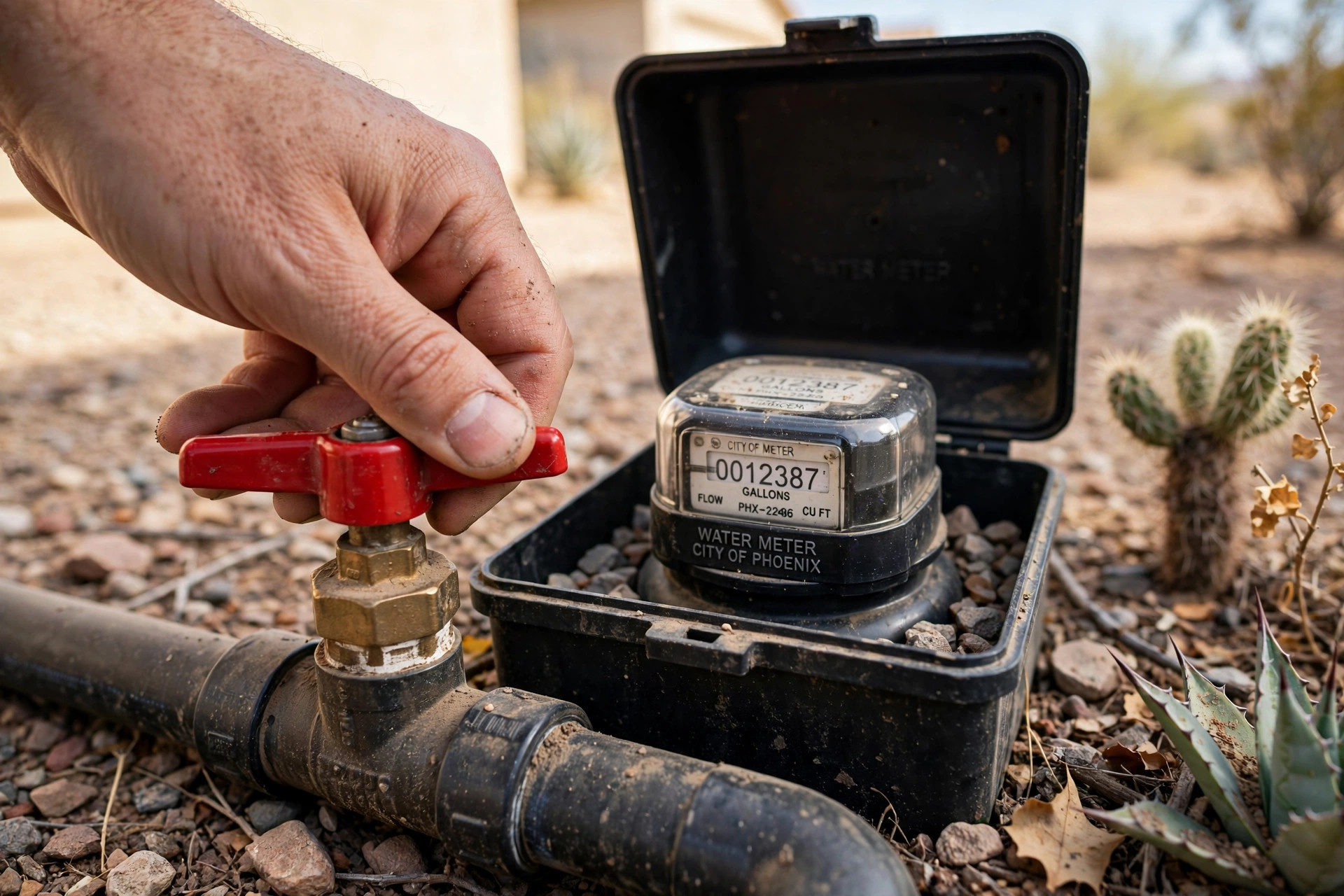
If the main house valve is stuck, broken, or you cannot find it, the meter shutoff is the backup. The water meter sits in a ground-level box near the sidewalk or street, and it has its own shutoff valve on the street side. Lifting the box lid and turning that valve stops water to the whole property. Some meter valves need a simple T-handled meter key, which costs little and is worth keeping near the box. Only use the meter valve when the house valve cannot do the job, and be gentle with it — forcing a seized valve can break it.
Fixture Shutoffs: Stopping One Tap, Not the House
Not every leak needs the whole house shut off. Sinks have small valves underneath them, toilets have one at the wall behind the bowl, and washing machines have hot and cold valves at their outlet box. Turning off just the affected fixture keeps the rest of the house running while you deal with the problem. Find these valves during a calm moment, label them if it helps, and turn each one twice a year so they do not seize. A fixture valve that has not moved in a decade is likely to stick exactly when you need it most.
Test It Before You Need It
Pick a quiet Saturday and test every shutoff in the house. Close the main valve, open a tap, and confirm the water stops — then reopen it and confirm pressure returns normally. Do the same for each fixture valve. If a valve is stiff, corroded, or drips when reopened, have it replaced before it becomes an emergency. Show every adult in the household where the main valve is and how it turns; in a real leak, the person home is not always the person who knows. A small label or a photo on the fridge turns knowledge into something anyone can act on.
After You Shut the Water Off
Once the water is off, open a low tap to relieve pressure in the lines, then mop up what has already escaped and note where the leak is — a photo helps. Do not turn the water back on to 'test' a suspected leak; pressure will just feed it again. If the leak's source is not obvious, or the meter test suggested a hidden break, call for water leak detection before reopening the supply. Detection pinpoints the break so the repair is focused, and our FAQ page explains what that visit looks like. Homeowners in Glendale and across the West Valley follow the same steps, and they work just as well at 2am as at 2pm.
Frequently Asked Questions
Where is the main water shutoff in most Sun City homes?
Usually where the water line enters the house — on an exterior wall near the garage, in a utility area, or near the water heater. If you cannot find it there, the meter box near the street has a backup shutoff valve.
Which way do I turn the valve to shut the water off?
A lever-handled ball valve closes with a quarter-turn, ending up across the pipe. A round gate valve closes by turning clockwise, usually several full turns. When in doubt, turn until the water stops.
Should I shut off the water if I only suspect a hidden leak?
If you see active flooding or a burst line, yes — immediately. For a suspected slow hidden leak with no flooding, run the meter test first, then decide: the shutoff is always the safe move if water is visibly escaping.
What if my shutoff valve is stuck?
Do not force it — a seized valve can break and make things worse. Use the meter shutoff as the backup, and have the stuck valve replaced before the next emergency.
Found a Leak but Can't Find the Valve?
Shut off the water at the meter if you must, then call for precise detection to find the break.
(623) 270-6035 Request a Quote