Water Softener Leaks: Brine Tanks, Drain Lines, and Bypass Valves
A water softener leak rarely starts with a flood. It starts with a damp patch beside the brine tank, a drain line that drips between cycles, or a bypass valve that weeps at its seals — small failures, easy to miss in a garage or utility room, that can quietly soak a floor for weeks before anyone notices.
- Practical homeowner guides
- Written by leak detection pros
- Sun City, AZ focused
Where Water Softeners Actually Leak
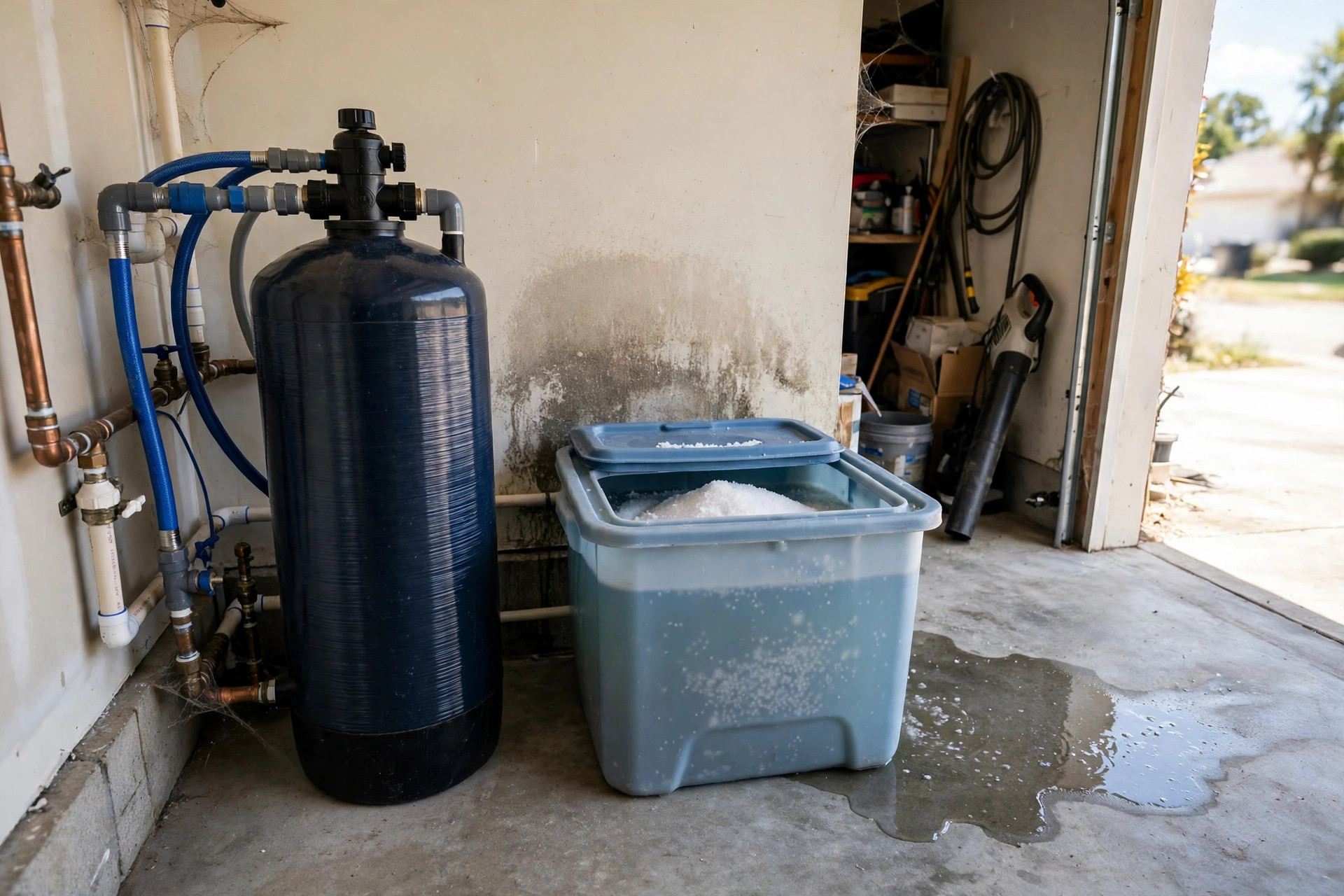
A softener has more leak points than most homeowners realise, because it combines pressurised supply lines, a resin tank, a brine tank full of salty water, and a drain line that runs to a floor drain or laundry standpipe. The usual suspects, in order: the bypass valve seals, where the unit connects to the house plumbing; the brine tank, which can crack, overflow, or leak at its fittings; the drain line, which can kink, clog, or pull loose; and the resin tank connections, which weep when seals age.
Each failure behaves differently. A bypass valve weep leaves a slow, steady damp patch; a brine tank overflow leaves salty water and white crust on the floor; a drain line failure often shows up only during regeneration, when the unit flushes — so the floor is wet in the morning and dry by evening, which makes it easy to dismiss. Knowing which part does what turns a mystery puddle into a short suspect list.
The Early Signs Most People Walk Past
The first sign is usually not water at all: it is salt. White crust on the floor or on the tank, salty residue on nearby stored items, or a brine tank that needs refilling far more often than usual all point to water escaping where it should not. Next, look for dampness: a dark patch on the concrete, a musty smell in the utility room, or cardboard boxes stored nearby going soft at the base.
Listen during a regeneration cycle, too. Gurgling, hissing, or water running when the unit should be quiet can mean a drain line problem. The same habit of noticing small changes serves every appliance in the room — our laundry room leak guide covers the washer hoses and drains that share the same space.
What to Do When You Find a Softener Leak
First, use the bypass valve — that is what it is for. Turning it to bypass takes the softener out of the water path and stops water reaching the failed part, while the rest of the house keeps its supply. Then mop up what has pooled, and check how far the water travelled: under stored items, along the wall base, and into any adjoining room. Salt water is corrosive to stored metal items and to concrete over time, so rinse the area with fresh water after mopping.
Next, identify the source before calling anyone: is the bypass valve itself wet, is the brine tank cracked or overflowing, or is the drain line loose at its connection? A photo of the wet part, plus a note of whether the leak is constant or only during regeneration, makes the repair visit far quicker. Do not keep running regeneration cycles on a leaking unit in the hope it clears — each cycle pushes more water through the failed part. If the leak is inside a wall or under the floor rather than at the unit itself, professional water leak detection can confirm whether the softener is even the culprit.
Maintenance That Prevents Most Softener Leaks
Most softener leaks are seal and hose failures, and seals age on a schedule you can stay ahead of. Once a season, check every visible connection by hand for dampness, look at the drain line along its full run for kinks or loose clamps, and inspect the brine tank for cracks and salt bridging — a hard crust of salt that stops the unit regenerating properly and can lead to overflow. Keep the area around the unit clear so a small puddle is visible instead of hidden under boxes.
Replace the drain line and any visibly worn hoses before they fail, not after, and keep a note of the age of the unit: a softener past its expected service life deserves closer watching, not looser. These checks take ten minutes and they catch the failures that turn into soaked garages. Homes across the area, including El Mirage, face the same hard-water workload on their softeners, so the same routine pays off everywhere.
When a Softener Leak Is Not the Softener
Sometimes the softener takes the blame for a leak that belongs to something else. A damp utility-room floor can come from the water heater next door, a washing machine hose behind it, or a slab line running beneath the room — and salt on the floor can be old residue, not a current leak. The test is simple: bypass the softener, dry the floor thoroughly, and check again in a day. If the dampness returns with the softener bypassed, the source is elsewhere.
That distinction saves a wasted repair. A softener technician fixes softeners; a hidden leak in the wall or slab needs detection first, and our FAQ page explains how that visit works. Either way, do not let a utility-room puddle sit: salt water and time are a poor combination for floors, walls, and anything stored nearby. Find the source, fix it, and dry the area properly.
Frequently Asked Questions
Can I still use water if my softener is leaking?
Yes — turn the bypass valve to bypass. The house keeps its water supply while the softener is isolated, and you will simply have unsoftened water until the repair.
Why is there salt on the floor near my softener?
Salt residue usually means brine water is escaping — from an overflowing brine tank, a cracked fitting, or a leaking connection. It is an early warning worth investigating.
How often should I check my water softener for leaks?
A quick visual check each season is enough for most homes: connections, drain line, brine tank, and the floor around the unit.
Does a softener leak damage concrete floors?
Standing salty water can stain and slowly damage concrete and corrode nearby metal over time, which is why even a small softener leak should not be left.
Puddle Beside the Softener?
Bypass it, dry the floor, and find the source before salty water spreads through the utility room.
(623) 270-6035 Request a Quote