Ceiling Water Stains: How to Trace an Upstairs Leak to Its Source
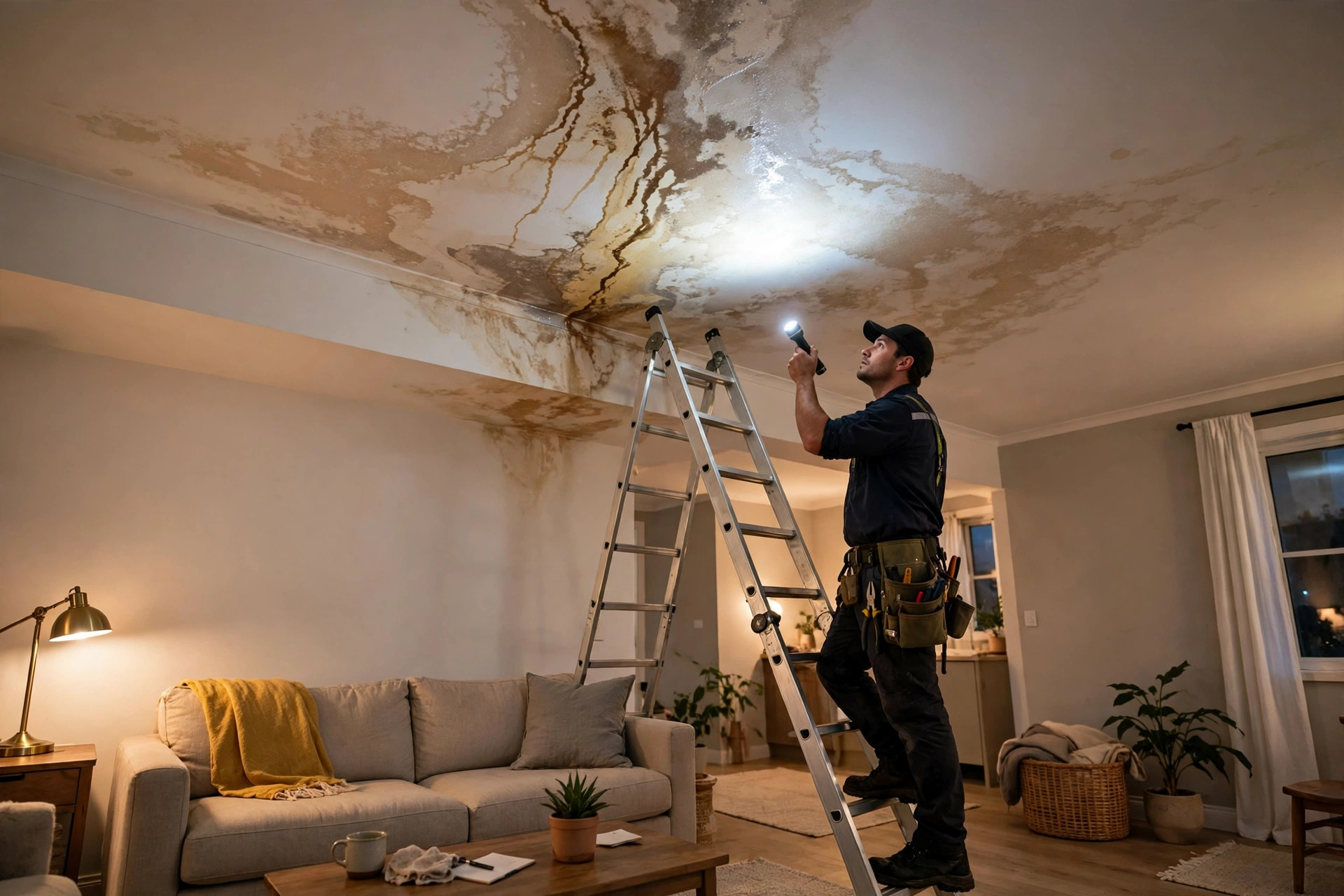
A ceiling leak rarely announces itself at the exact spot where the water gets in. The stain on your ceiling may sit feet away from the failed joint, cracked grout line, or worn seal upstairs — because water travels along joists, pipes, and drywall before gravity finally pulls it down.
- Practical homeowner guides
- Written by leak detection pros
- Sun City, AZ focused
Why the Stain Is Rarely Directly Below the Leak
Water follows the path of least resistance, and inside a ceiling that path is rarely straight down. A slow drip from an upstairs bathroom can run along a pipe, pool on top of drywall, and only break through at a seam or a light fixture several feet from the source. That is why patching the stain itself never fixes anything: the leak keeps feeding the same hidden route, and the next stain appears nearby. Before any repair, the job is to find where the water starts, not where it lands. A ceiling leak detection visit traces that route with listening equipment and moisture readings rather than opening the ceiling at random.
The direction of travel also gives clues. A stain that grows after every shower points upstairs to the tub or shower above; one that appears after rain points to the roof or an exterior wall instead. Note when the stain darkens and whether it lines up with a bathroom, a laundry room, or a water heater closet on the floor above.
The Usual Upstairs Suspects
In Sun City homes, most ceiling stains trace back to a short list of upstairs sources. Shower and tub enclosures lead it: failed grout, a cracked shower pan, or a worn seal around the drain lets water past the enclosure and into the floor structure. Toilets come next, usually a worn wax ring or a loose base that lets water escape with every flush — the same kind of slow failure behind many bathroom leak warning signs.
Less obvious sources include an air-conditioning condensate line routed through the ceiling, a water heater closet on an upper floor, and a refrigerator water line in a kitchen above. Each produces a different pattern: a toilet-ring leak often stains in a neat circle, a shower-pan leak spreads wide and stays damp, and a supply-line drip grows steadily whether or not anyone is using water. Matching the pattern to the fixture above narrows the search fast.
What to Check Before You Call
Start upstairs, not under the stain. Look around the base of the toilet above for dampness or a rocking base, check the caulk and grout lines in the shower, and feel the cabinet floor under the sink. Run the shower for a few minutes and watch whether the stain below darkens or drips — if it does, you have found the trigger, even if the exact entry point is still hidden. If nothing upstairs looks wet, check whether the stain changes with the weather; a rain-only stain is a roofing matter, not a plumbing one.
Do not cut into the ceiling yourself to look. An opened ceiling spreads wet insulation, risks cutting a live wire or a pipe, and rarely reveals the source, since the entry point may be several feet away. Photograph the stain, note the date and what was running when it appeared, and keep the area below clear. If the ceiling sags, bulges, or drips steadily, stop investigating and get help the same day. Our FAQ page explains what a detection visit looks like.
How Professionals Pinpoint a Ceiling Leak
A detector starts with moisture readings across the ceiling and the floor above, mapping the wet area instead of guessing from the stain. Acoustic listening picks up the hiss or drip of a pressurised line, while thermal imaging shows the cooler, damp path water has travelled. Together these readings draw a map of the leak route, and the entry point is usually where they converge — often well away from the stain itself.
That map is what keeps the repair small. Without it, a plumber may open several ceiling sections chasing a stain; with it, one measured opening reaches the failed joint or seal. The same non-invasive approach serves homes across the area, including Sun City West, where many homes share the same single-storey-with-loft and two-storey layouts. Once the source is found, the repair itself is a separate, straightforward job — but only pinpointing first keeps it that way.
After the Source Is Found: Drying and Watching
Fixing the leak is only half the job; the ceiling cavity must dry properly afterwards. Wet insulation and drywall that stay damp invite musty smells and mould growth weeks later, long after the stain has been painted over. Keep an eye on the spot for a few weeks: a stain that returns in the same place means the true source was missed.
Keep the simple habit that prevents the next surprise: once a season, look at the ceilings below every bathroom and the laundry, and check the caulk and grout upstairs before they fail rather than after. A ceiling stain is your home telling you about a leak early, while the damage is still a stain and not a collapse.
Frequently Asked Questions
Does a ceiling stain always mean a plumbing leak?
Not always. A stain that appears only after rain usually points to the roof or an exterior wall, while one tied to showers, flushing, or laundry points to plumbing upstairs. Timing is the best first clue.
Can I just paint over a ceiling water stain?
Paint hides the mark but not the leak. The water keeps travelling, the damage spreads inside the ceiling, and the stain returns — usually larger. Find and fix the source first, dry the area, then repaint.
How far from the stain can the leak actually be?
Several feet is common, because water runs along joists and pipes before dripping through. That is why detectors map moisture across the ceiling instead of opening it directly under the stain.
Is a sagging or dripping ceiling an emergency?
Treat it as urgent. A sagging ceiling may be holding a surprising weight of water, and a steady drip means an active leak. Clear the area below and get it checked the same day.
Ceiling Stain You Cannot Explain?
Do not paint over it and hope. Pinpoint the upstairs source before the damage spreads through the ceiling.
(623) 270-6035 Request a Quote