Pipe Materials in Sun City Homes: Copper, PEX, and Galvanized — What Fails and When
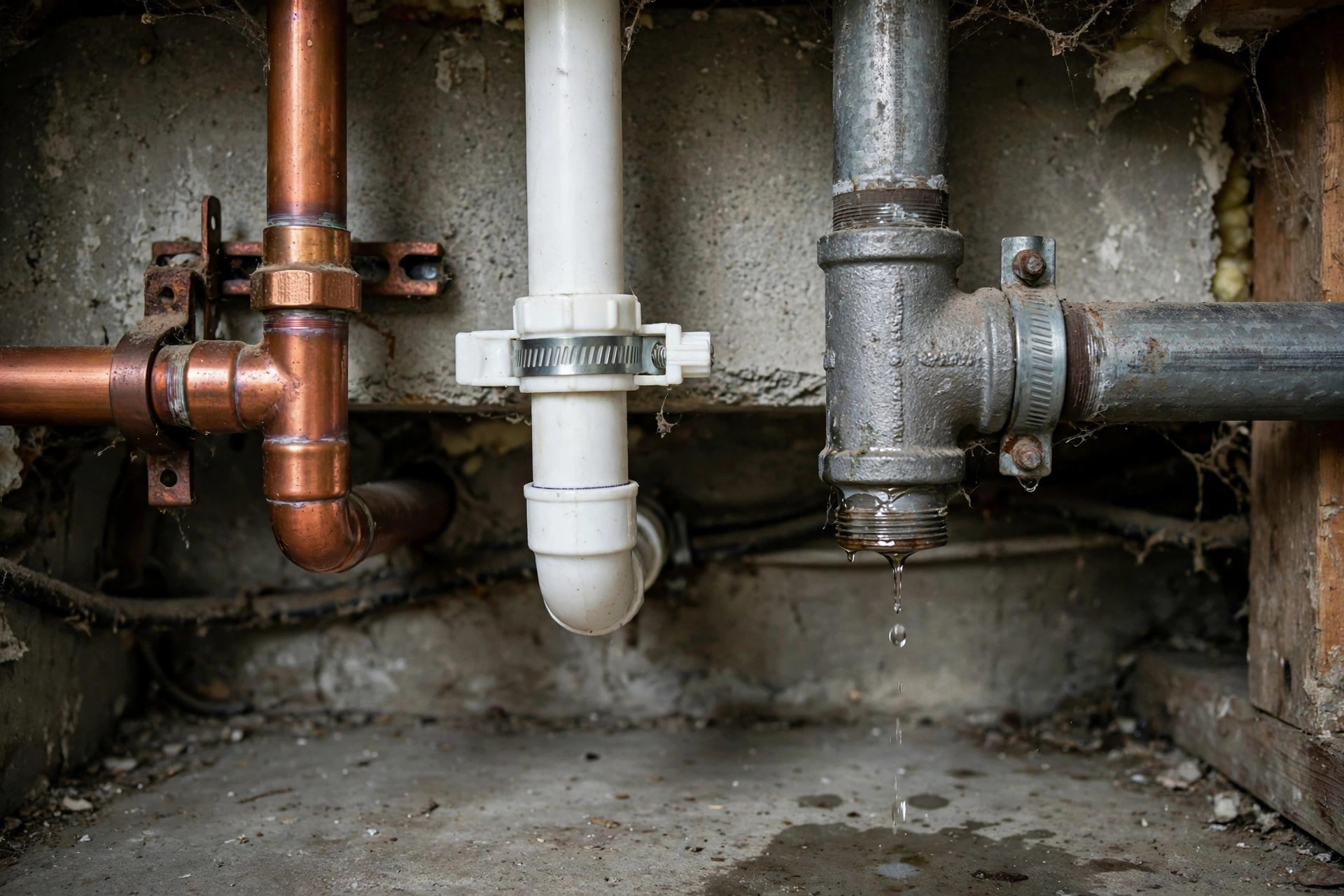
A Sun City home may carry three generations of pipe in its walls: galvanized steel from the original build, copper from a later update, and PEX from the newest work. Each fails differently — here is how to tell which you have and what to watch.
- Practical homeowner guides
- Written by leak detection pros
- Sun City, AZ focused
What to Ask Before Any Pipe Work
Before any pipe work, ask three questions and write down the answers: what material is actually in the walls, where exactly is the leak, and what will the repair leave accessible for the next check. A pinpointed location matters more than a general diagnosis, because a single failed joint and a failing system call for very different responses. Ask whether the repair will use the same material or a transition, and where the transition will sit — transitions buried in walls hide future corrosion, while accessible ones can be inspected. Keep the answers with the house records: the next person who works on the plumbing starts from evidence instead of guesswork, and a documented repair history protects the home at resale as well.
Galvanized Steel: The Oldest Pipes in Town
Galvanized steel was standard in many original Sun City builds. It corrodes from the inside out, narrowing the pipe and weakening the walls, so the first signs are often low pressure at one fixture, rusty or discoloured water after the tap sits unused, and leaks at threaded joints. A galvanized system that has started leaking at joints is usually near the end of its service life, and new leaks tend to follow the first one. If your home still runs original galvanized lines, a guide to older-home pipes explains what to expect as they age.
Copper: Long-Lived, Not Invulnerable
Copper lasts decades, but desert water chemistry and pinhole corrosion can still open small leaks, often as a slow weep at a joint or a pinhole in a run. Copper leaks in walls show as damp patches, paint bubbling, or a musty smell on the shared wall, and in slab homes they can surface as a warm or damp floor patch. A slab leak check finds copper slab leaks without lifting floors at random.
PEX: Flexible, With Its Own Weak Points
PEX resists corrosion and handles freezing better than rigid pipe, but its fittings and connections are the weak points: a poorly crimped fitting, a fitting stressed by movement, or exposure to sunlight in an attic or garage can all lead to leaks. PEX leaks often appear at manifolds and fixture connections rather than mid-run. Because PEX runs are flexible, a leak in one can travel along the line and appear some distance from the break.
Mixed Systems and Transition Joints
Where old and new pipe meet — galvanized to copper, copper to PEX — the transition fitting itself deserves attention. Different metals joined directly can corrode faster, and a transition buried in a wall hides that corrosion until it leaks. If a leak keeps appearing near a remodel boundary, the transition joint is a prime suspect. A wall leak detection check can confirm whether the source sits at a joint or in a run.
Knowing Your Pipes Changes the Check
Find out what your home carries: look at exposed pipe near the water heater and under sinks, and note the material. That one fact tells a detector where to listen first, and it tells you which warning signs to take seriously. Our FAQ page explains what a detection visit looks like, whatever your pipes are made of.
Frequently Asked Questions
How do I tell what pipes my home has?
Look at exposed pipe near the water heater: galvanized is dull grey steel, copper is reddish-brown metal, and PEX is flexible plastic, usually white, red, or blue.
Which pipe material leaks first in Sun City?
Original galvanized lines age first, corroding from the inside. Copper and PEX last longer, but their joints and fittings can still fail.
Can different pipe materials in one home cause leaks?
Transition joints between materials deserve attention, especially where different metals meet directly. Corrosion at the joint can outpace the pipes themselves.
Does a slab leak mean the whole system is failing?
Not necessarily. A single joint or pinhole can leak while the rest of the system is sound — detection finds the one break rather than condemning the system.
Rusty Water, Low Pressure, or a Damp Wall Patch?
Each pipe material fails differently. Call for precise detection that finds the one break, whatever your pipes are made of.
(623) 270-6035 Request a Quote